In the heart of St. Petersburg, on Anichkov Bridge, for almost two centuries stand the monumental creations of Baron Pyotr Karlovich Klodt – the sculptural compositions "Horse Taming by Man." These bronze giants, which have become the calling card of the city, embody the eternal drama where the strength of the human spirit conquers the untamed power of nature.
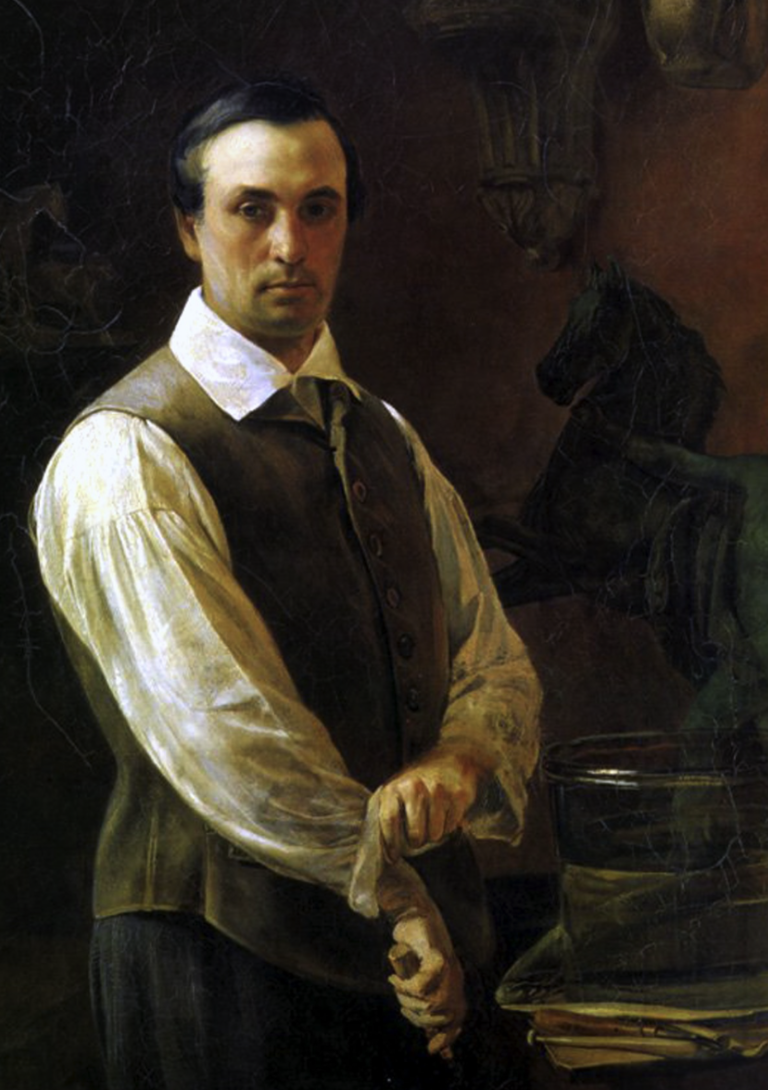
Portrait of Baron Pyotr Karlovich Klodt by F.A. Goretsky, 1850
Dramatic History of Creation
The creation of these masterpieces became Klodt's life's work, spanning decades. The first two groups, symbolizing the beginning of the struggle, were installed in 1841 on the western side of the bridge. Gypsum copies, skillfully painted to resemble bronze, temporarily occupied their places. The fate of the sculptures was closely intertwined with the intricacies of Nicholas I's diplomacy. The delighted Prussian King Frederick William IV received one pair as a gift in 1842. By 1846, new bronze statues were sent to Naples as a gift to King Ferdinand II. By 1851, Anichkov Bridge gained its finished grandeur: four pedestals shone with unique bronze compositions. Klodt did not simply copy – he recreated, creating a single, breath-taking story of conquering the wild elements.
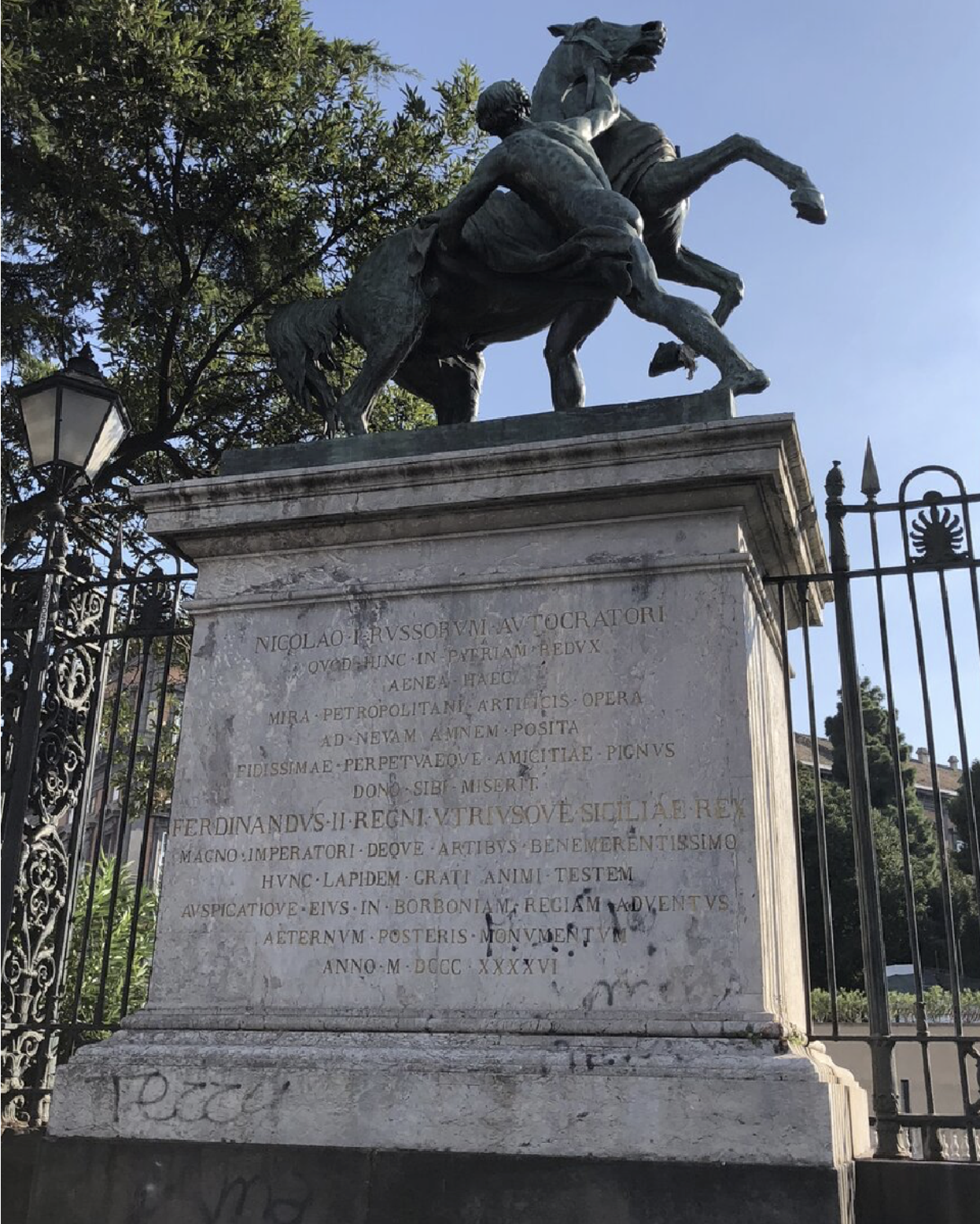
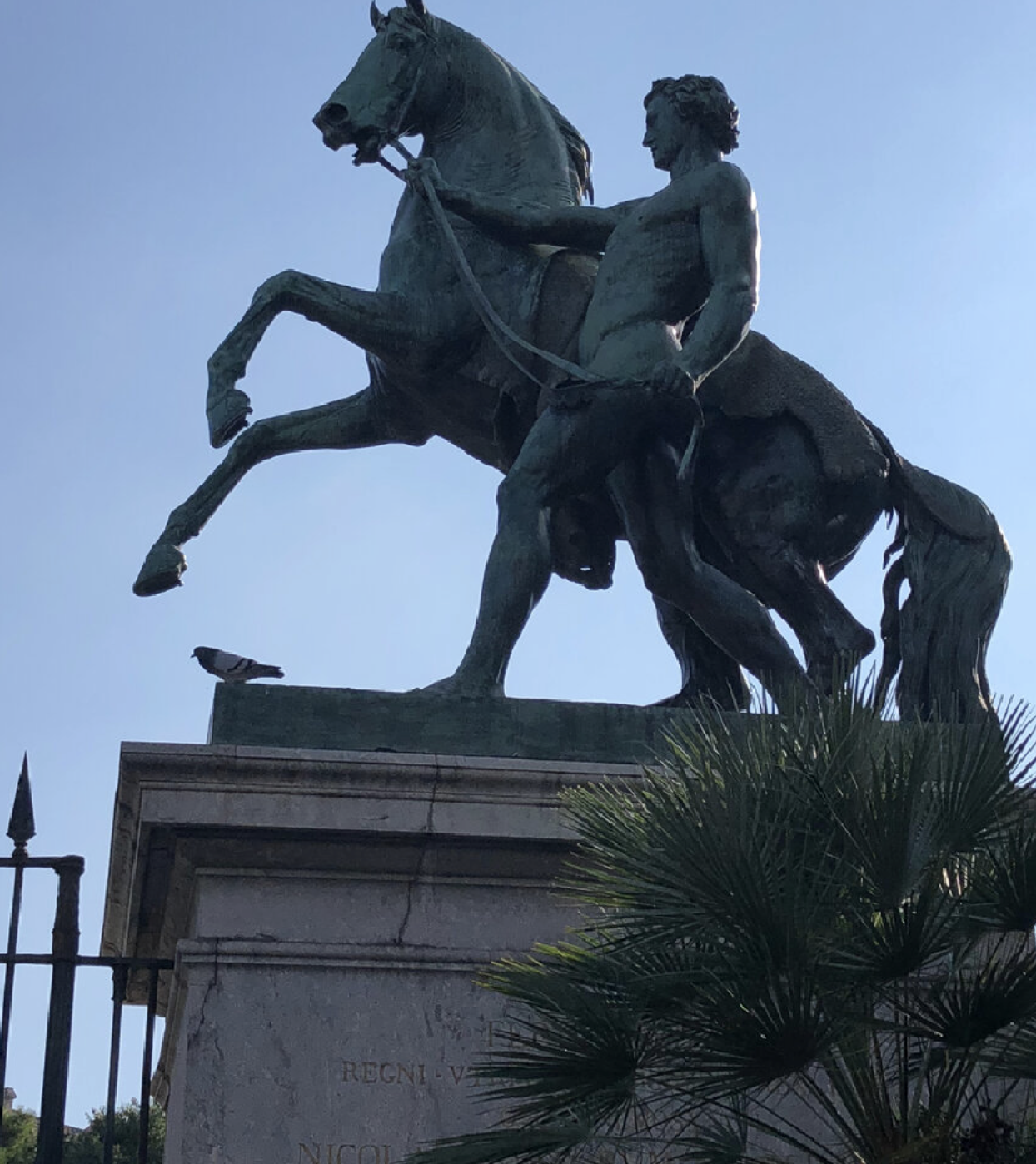
Klodt Horse Tamers in Naples
Symphony of Conquest
Four sculptural groups tell the story of taming a wild horse, each representing a stage of this titanic confrontation.
Southwest corner: Moment of pristine fury. The horse struggles, the bridle barely held in the tamer's hands, whose strength is at its limit.
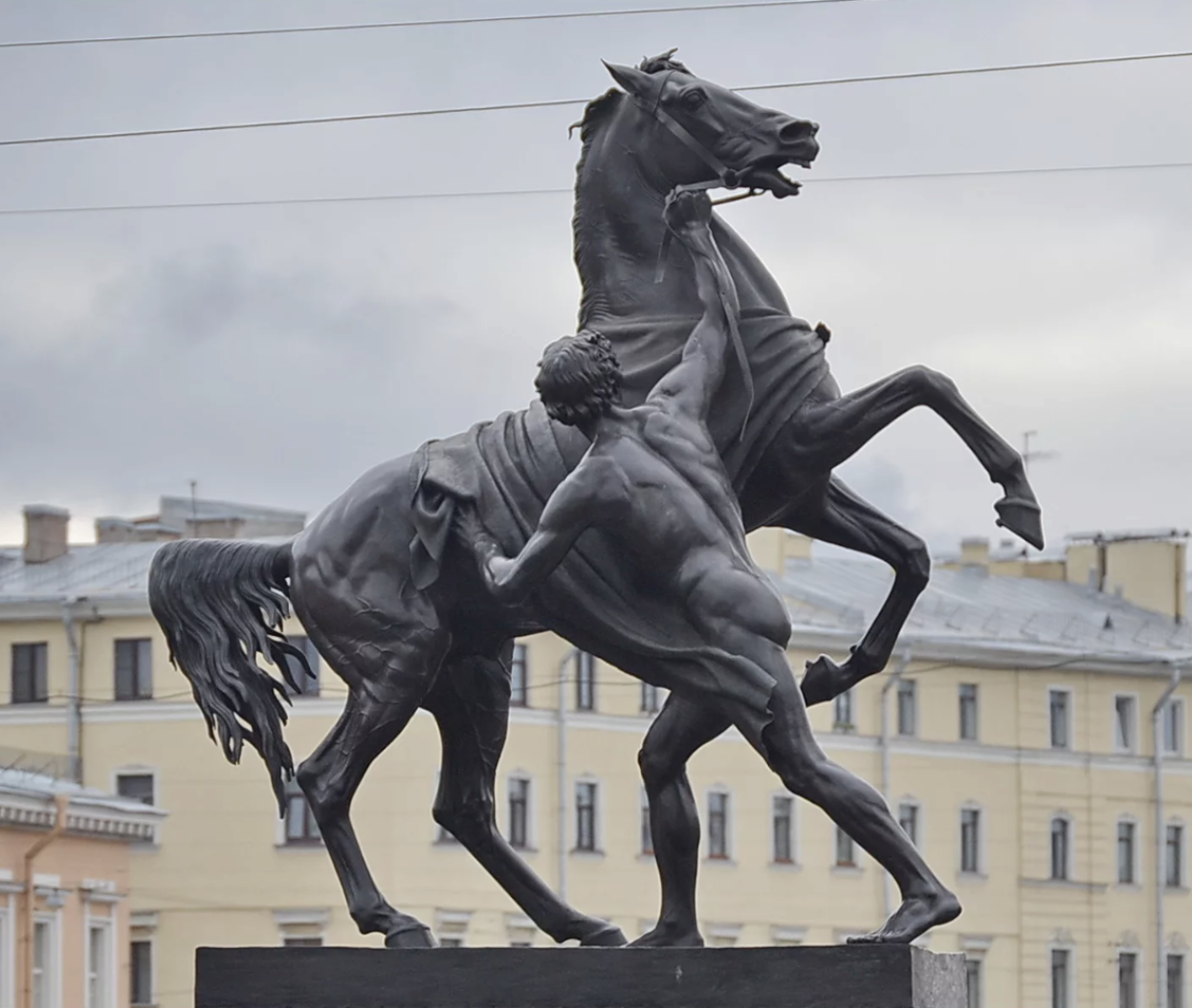
Southwest corner
Northwest corner: The struggle is in full swing. A determined man strives to subdue the untameable, to put a bridle on the maddened animal.
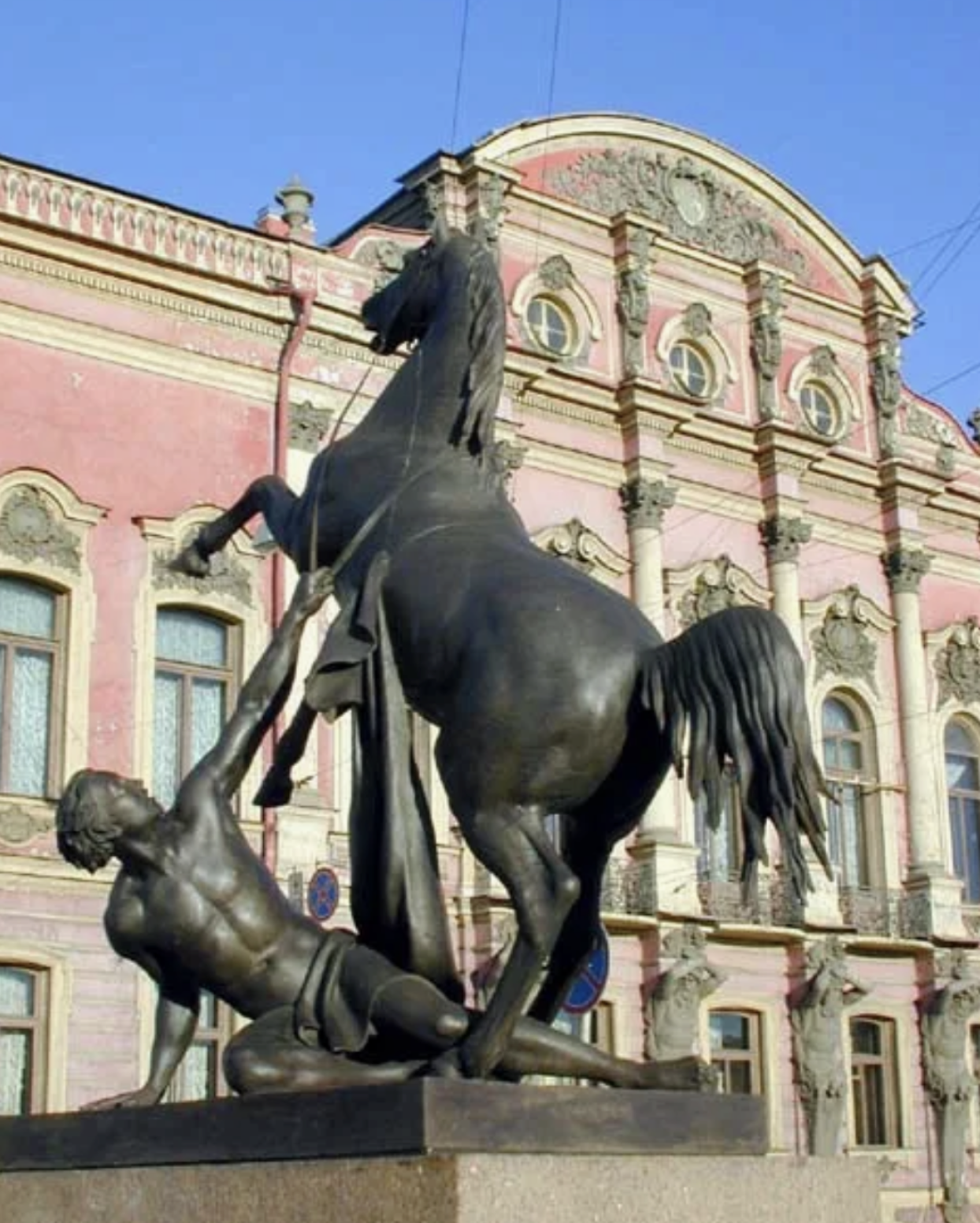
Northwest corner
Southeast corner: First signs of submission. The horse still resists, but a shadow of future obedience shows in its movements.
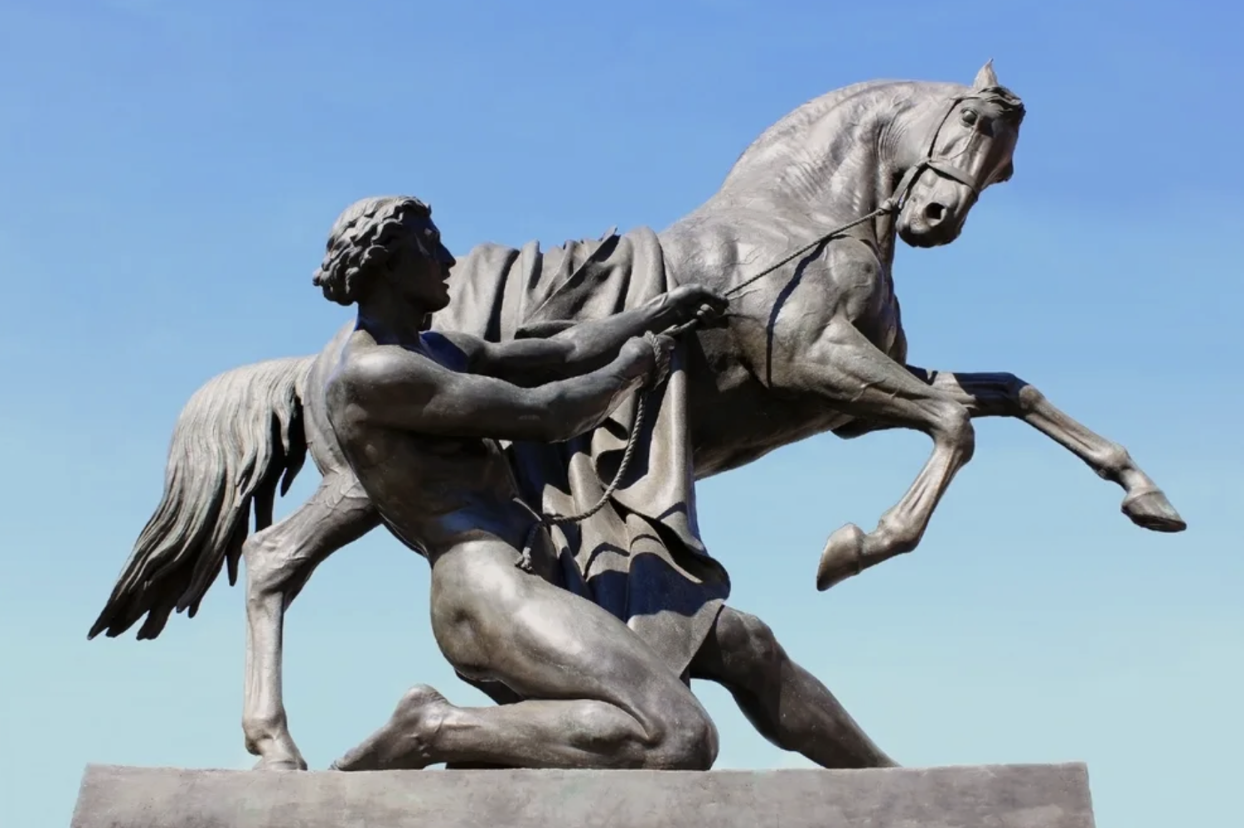
Southeast corner
Northeast corner: Triumph of man. Taming completed. The obedient horse, clad in a lion's skin – the symbol of Heracles – calmly walks under the bridle, embodying absolute victory.
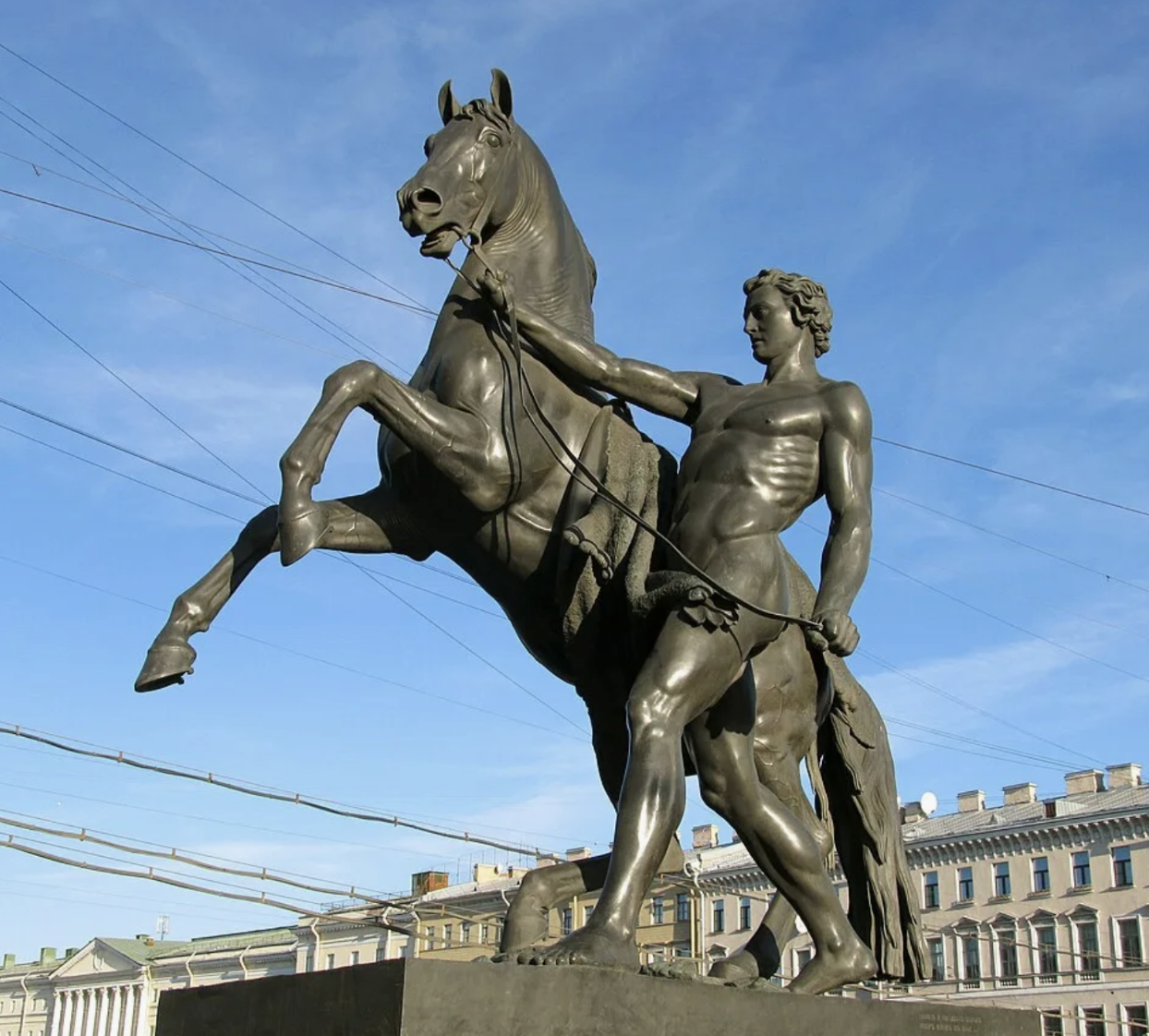
Northeast corner
Klodt's Realism and Genius
Klodt approached his work with naturalism unprecedented for his time. By studying the anatomy and habits of horses, he achieved perfect verisimilitude. The sculptor personally dissected horse heads, legs, and shoulders, took plaster casts to fully convey the power and beauty of the animal.
Symbolism, Dynamics and Cultural Echo
The sculptures proclaim the triumph of human reason and will over natural instincts. Revolutionary dynamics – Klodt was the first in world sculpture to convey movement and narrative, allowing the viewer to "read" the story by walking around the monument.
Influence on Art
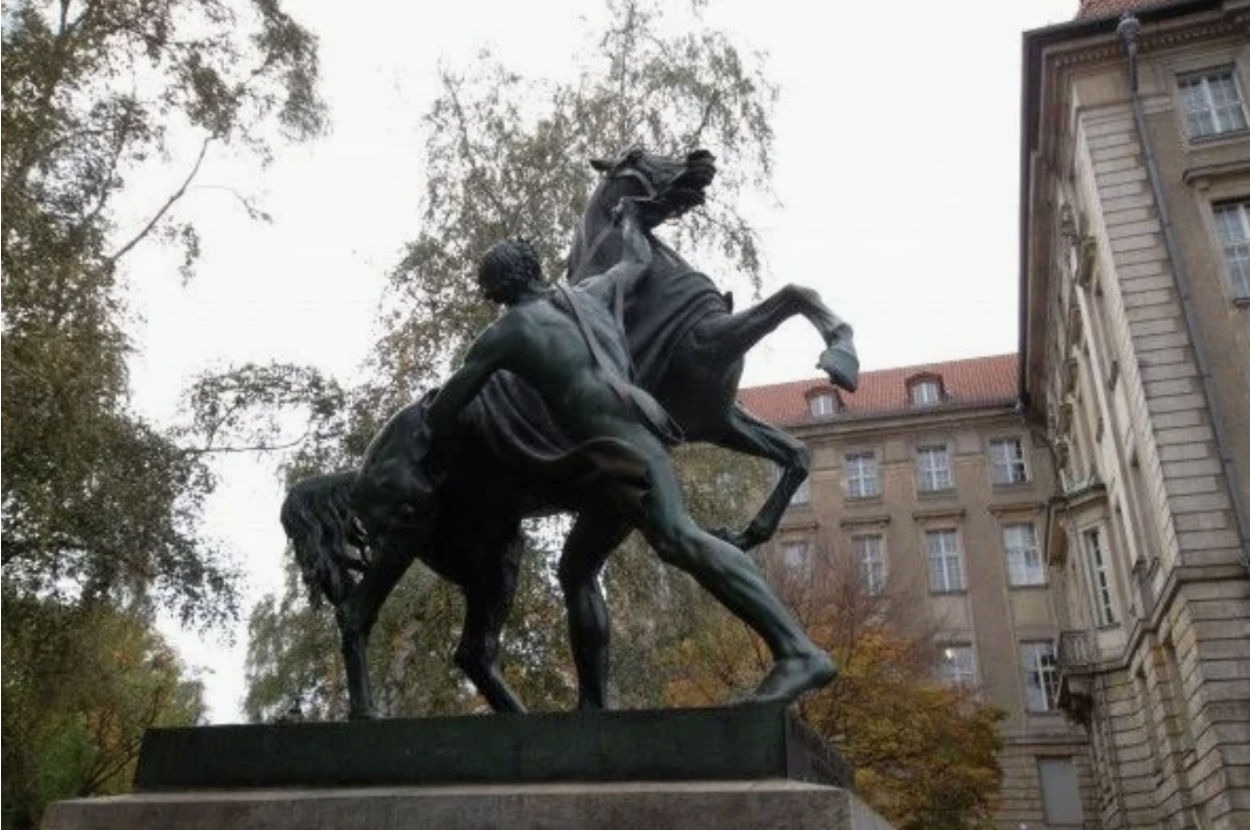
P.K. Klodt sculpture in Kleist Park, Berlin
Copies of Klodt's sculptures adorned palaces and estates, spreading his genius throughout Europe.
Cultural Heritage
Anichkov Bridge became an integral part of the Russian cultural code, celebrated in the works of Dostoevsky, Blok.
Test of War
During the Great Patriotic War, to save the masterpieces from destruction, the sculptures were removed from pedestals and hidden underground. After the war, they triumphantly returned to their places. And today, the horse groups on Anichkov Bridge continue to inspire and delight, remaining one of the most recognizable and beloved symbols of St. Petersburg.
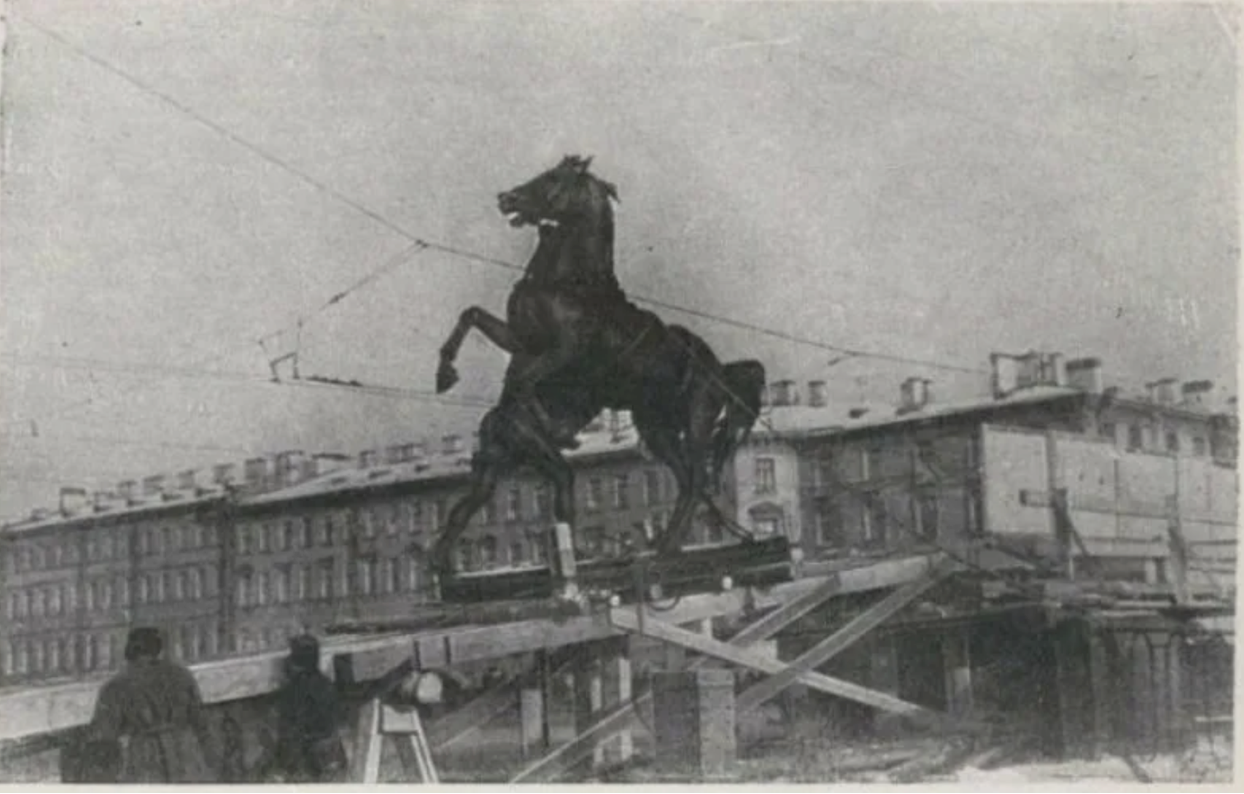
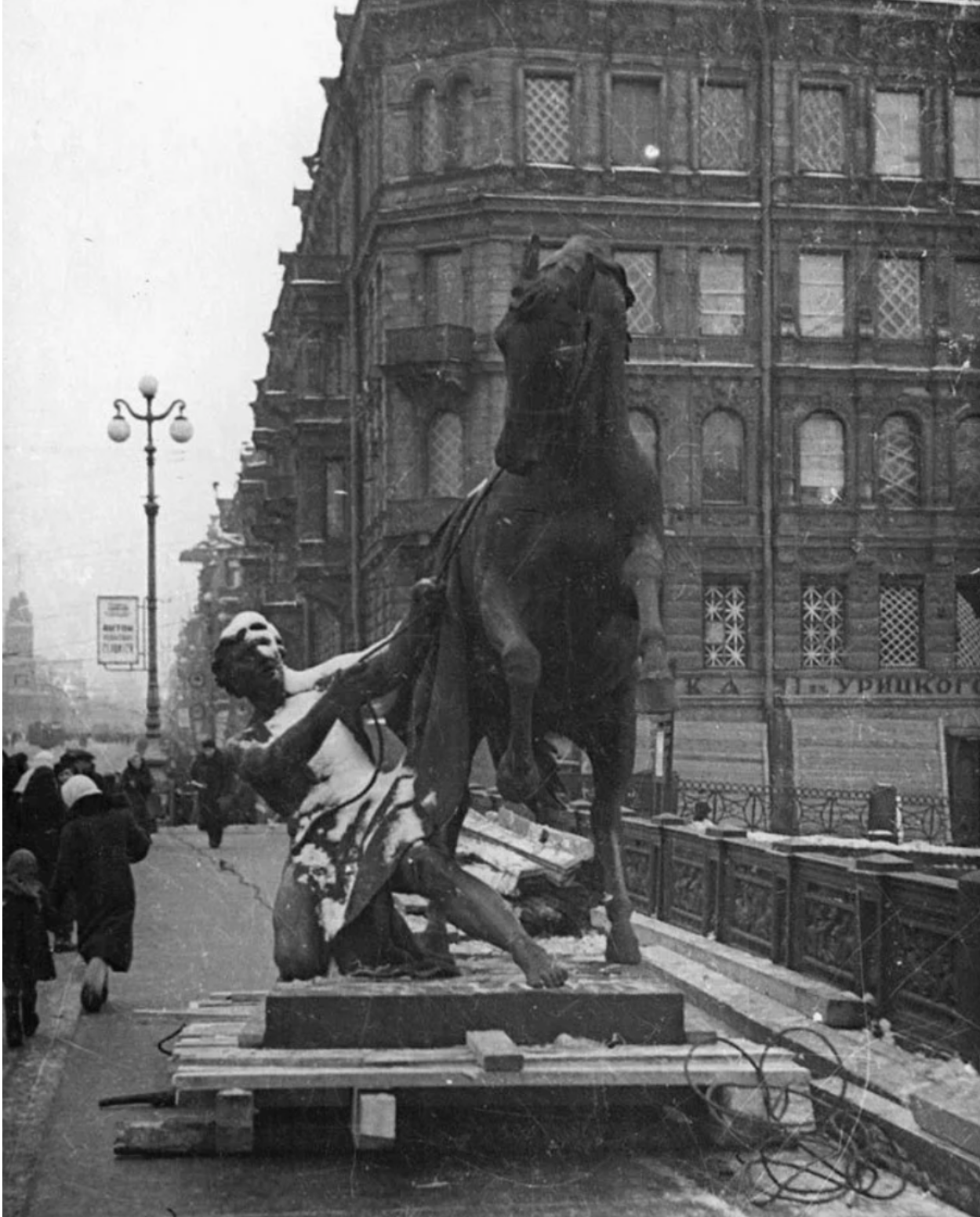
Removal of sculptures in 1941
"Horse Taming by Man" carries deep symbolism, proclaiming the triumph of human reason and will over natural instincts. These sculptures are not just decoration, but an important cultural heritage that has become an integral part of the Russian cultural code, inspiring many writers and artists. Their resilience was proven during the harsh war years, when hidden from destruction, they proved their vitality and importance to the nation.